
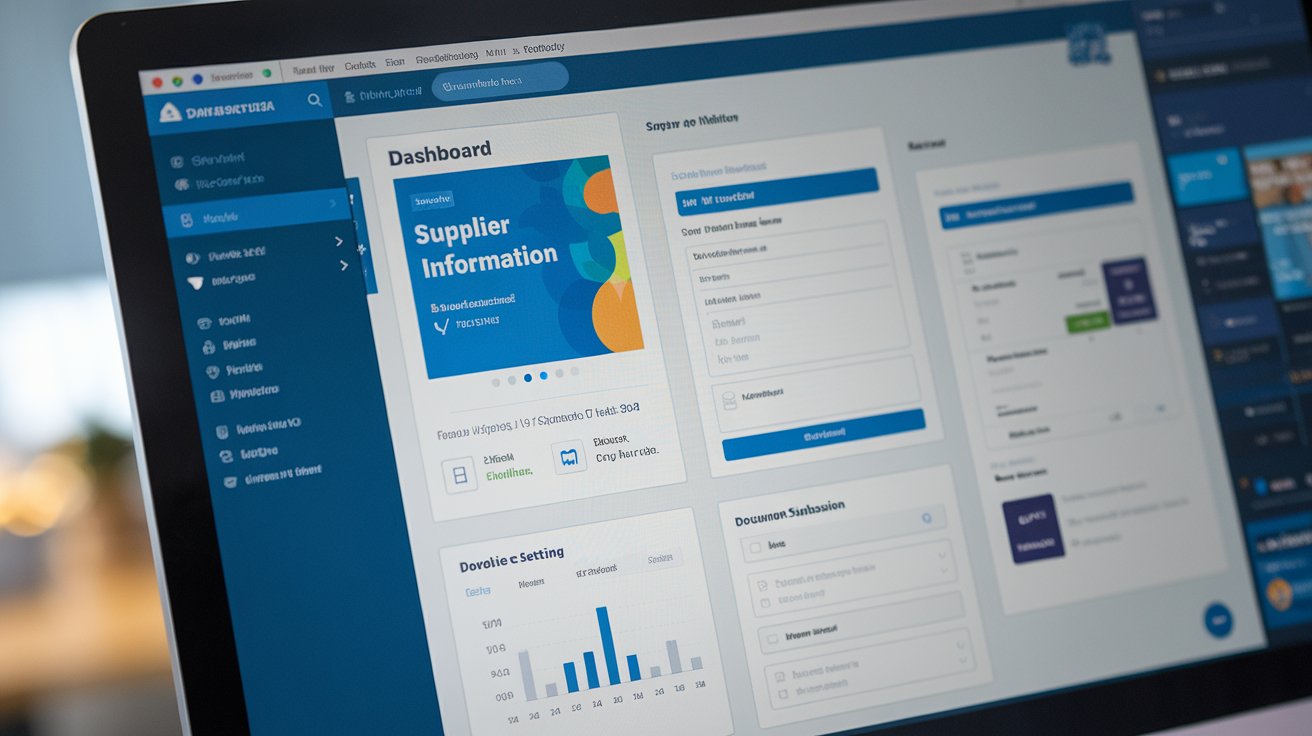
A supplier onboarding portal is a digital platform that automates and centralizes the process of registering, verifying, and integrating new vendors into an organization’s procurement ecosystem. In 2026, over 78% of US enterprises utilize these portals to reduce onboarding time from an average of 45 days to just 7-10 days, while ensuring compliance, data accuracy, and seamless integration with enterprise resource planning systems. This comprehensive guide explains how onboarding portals transform vendor management from manual paperwork into streamlined digital workflows.
Understanding Supplier Onboarding Portals
A supplier onboarding portal serves as the central hub where vendors submit required documentation, complete compliance forms, and provide business information necessary for procurement relationships. Unlike traditional email-based processes, modern onboarding portals offer self-service capabilities that allow suppliers to register independently while maintaining organizational standards. According to 2026 procurement data, companies using dedicated portals experience 63% fewer data entry errors compared to manual onboarding methods.
The portal functions as a bidirectional communication channel between procurement teams and suppliers. Vendors access a branded interface where they upload tax documents, insurance certificates, banking details, and product catalogs. Meanwhile, procurement professionals monitor progress, request additional information, and approve suppliers through administrative dashboards. This digital transformation has reduced the average cost per supplier onboarding from $487 in 2020 to $142 in 2026 across US organizations.
Core Components of a Modern Supplier Onboarding Portal
Effective supplier onboarding portals in 2026 integrate multiple functional components that address different aspects of the vendor registration process. These components work together to create a comprehensive onboarding ecosystem that serves both supplier convenience and organizational compliance needs.
Document Collection and Verification Systems
The document management component enables suppliers to upload certifications, licenses, insurance policies, and tax forms directly through the portal interface. Advanced onboarding portals in 2026 incorporate AI-powered document verification that automatically validates W-9 forms, confirms insurance coverage adequacy, and flags expired certifications. This automated verification reduces manual review time by approximately 72% while maintaining accuracy rates above 94%. Organizations like Wells Fargo have implemented these systems to process over 15,000 supplier documents monthly with minimal human intervention.
Compliance and Risk Assessment Tools
Modern portals include integrated compliance screening that automatically checks suppliers against government watchlists, sanctions databases, and industry-specific regulatory requirements. The onboarding process incorporates real-time risk scoring based on financial stability indicators, cybersecurity assessments, and ESG (Environmental, Social, Governance) criteria. In 2026, 84% of US procurement organizations require suppliers to complete cybersecurity questionnaires through the portal, addressing growing supply chain vulnerability concerns. These tools generate comprehensive risk profiles that inform approval decisions and ongoing monitoring strategies.
Integration with Enterprise Systems
Seamless connectivity with ERP systems, procurement platforms, and financial software distinguishes enterprise-grade supplier onboarding portals from basic registration forms. The portal automatically transfers approved supplier data into systems like SAP, Oracle, or Coupa, eliminating duplicate data entry. This integration ensures that verified banking information, tax identification numbers, and payment terms flow directly into accounts payable systems. According to 2026 implementation studies, organizations with fully integrated portals achieve 91% first-time payment accuracy compared to 67% with manual data transfer processes.
The Five Stages of the Supplier Onboarding Process
Understanding the stages of the onboarding process helps organizations optimize their portal configuration and supplier experience. Each stage addresses specific requirements while progressively building the complete supplier profile necessary for transactional relationships.
Stage 1: Initial Registration and Information Gathering
The onboarding process begins when suppliers receive an invitation to register through the portal, typically via email with unique access credentials. During this stage, vendors provide fundamental business information including legal entity names, tax identification numbers, business addresses, and primary contact details. Modern vendor onboarding software pre-populates certain fields using third-party data sources like Dun & Bradstreet, reducing supplier effort by approximately 40%. The portal validates email addresses, checks for duplicate registrations, and confirms the supplier’s legal status in real-time.
Stage 2: Documentation Submission and Compliance Verification
During the second stage, suppliers upload required documentation based on their category, location, and the goods or services provided. The portal presents a customized checklist that may include certificates of insurance, safety certifications, diversity classifications, and financial statements. Advanced portals like Hicx incorporate intelligent document recognition that automatically extracts key data points from uploaded files. This stage typically accounts for 35-45% of total onboarding time, though automation has reduced average completion from 18 days in 2022 to 4-6 days in 2026 across US organizations.
Stage 3: Risk Assessment and Due Diligence
The third stage involves comprehensive evaluation of the supplier’s qualifications, financial stability, and risk profile. The supplier onboarding portal automatically initiates background checks, credit assessments, and regulatory compliance screenings. Procurement teams review automated risk scores alongside industry-specific criteria such as quality certifications or environmental standards. In 2026, 76% of US procurement organizations use predictive analytics within their portals to forecast supplier performance based on historical data from similar vendors. This stage culminates in an approval recommendation presented to designated decision-makers.
Stage 4: Approval Workflow and Contract Execution
Approved suppliers advance to the contract stage where the portal facilitates terms negotiation, contract creation, and digital signature collection. Modern supplier portal software integrates with electronic signature platforms like DocuSign or Adobe Sign, enabling complete contract execution without leaving the portal environment. The system tracks approval routing through organizational hierarchies, sends automated reminders for pending signatures, and stores executed agreements in centralized repositories. This digital approach has reduced contract cycle times from an average of 23 days to 5-7 days while improving compliance through standardized templates.
Stage 5: System Integration and Transaction Enablement
The final stage transitions approved suppliers into active vendor status within the organization’s procurement systems. The onboarding portal pushes complete supplier records to ERP systems, establishing master data that enables purchase order creation, invoice processing, and payment execution. This stage includes configuring payment methods, setting up catalog connections for preferred suppliers, and provisioning access to additional procurement tools. Organizations using platforms like Medius report that automated system integration reduces go-live issues by 68% compared to manual data entry approaches, ensuring suppliers are ready to transact immediately upon approval.
Benefits of Implementing a Supplier Onboarding Portal
Organizations that deploy dedicated supplier onboarding portals realize measurable improvements across operational efficiency, compliance, and supplier relationship metrics. These benefits extend beyond procurement departments to impact accounts payable, risk management, and strategic sourcing functions.
Accelerated Time-to-Value for New Suppliers
Digital onboarding portals compress the timeline from supplier identification to first transaction by automating manual tasks and eliminating communication delays. The self-service nature allows suppliers to complete requirements on their schedules rather than waiting for procurement team availability. 2026 benchmarking data shows that organizations with mature portal implementations onboard strategic suppliers in 7-10 days compared to 35-50 days for companies using email-based processes. This acceleration directly impacts revenue-generating activities, with procurement teams reporting 34% faster time-to-market for new products requiring new supplier relationships.
Enhanced Data Quality and Compliance
Automated validation within supplier onboarding portals ensures that collected data meets quality standards before entering master systems. Required field enforcement, format validation, and real-time verification against external databases prevent incomplete or inaccurate records. Organizations report that portal-onboarded suppliers have 89% cleaner master data compared to 56% for manually onboarded vendors. This quality improvement reduces payment failures, duplicate vendor records, and compliance violations. In regulated industries, audit-ready documentation trails within the portal demonstrate due diligence compliance, reducing audit preparation time by an average of 127 hours annually.
Improved Supplier Experience and Engagement
Suppliers increasingly expect consumer-grade digital experiences in their business interactions. A well-designed onboarding portal provides transparency into requirements, real-time status updates, and clear guidance through each process stage. This transparency reduces supplier inquiries to procurement teams by approximately 58%, freeing resources for strategic activities. Positive onboarding experiences correlate with stronger supplier relationships, with vendors onboarded through portals showing 23% higher performance ratings and 31% greater willingness to participate in innovation initiatives according to 2026 supplier relationship studies conducted across US enterprises.
Key Features to Evaluate in Supplier Onboarding Tools
When selecting supplier onboarding tools or vendor onboarding software, organizations should assess capabilities across several critical dimensions that determine implementation success and long-term value realization.
Customization and Workflow Configuration
Leading supplier portal software platforms offer configurable workflows that adapt to different supplier categories, risk levels, and commodity types. The ability to customize required documentation, approval routing, and data collection forms without extensive coding enables organizations to match the portal to existing processes rather than forcing process changes. In 2026, no-code configuration capabilities have become standard, allowing procurement teams to modify onboarding workflows in hours rather than weeks. Organizations with highly customized portals report 42% higher user adoption rates among both suppliers and internal stakeholders.
Analytics and Reporting Capabilities
Comprehensive analytics transform supplier onboarding portals from transaction systems into strategic intelligence sources. Dashboards should track metrics like average onboarding duration, bottleneck identification, supplier completion rates, and compliance status across the vendor base. Advanced platforms incorporate predictive analytics that forecast onboarding completion dates and identify at-risk registrations requiring intervention. Procurement leaders using analytics-enabled portals report 37% improvement in onboarding cycle time through data-driven process refinements. These insights also inform supplier segmentation strategies and resource allocation decisions within procurement organizations.
Mobile Accessibility and User Experience
With 68% of suppliers accessing business portals via mobile devices in 2026, responsive design has transitioned from optional to essential. Mobile-optimized onboarding portals enable suppliers to photograph and upload documents, complete forms, and check status from smartphones or tablets. User experience considerations extend beyond mobile compatibility to include intuitive navigation, progress indicators, contextual help content, and multilingual support for global supplier networks. Organizations implementing mobile-first portal designs report 52% faster supplier completion rates and 44% reduction in support inquiries compared to desktop-only implementations.
Supplier Onboarding Portal Implementation Best Practices
Successful supplier onboarding portal implementations require strategic planning, stakeholder alignment, and phased rollout approaches that minimize disruption while maximizing adoption. Organizations that follow structured implementation methodologies achieve target benefits 3.2 times faster than those using ad-hoc approaches.
Begin with comprehensive requirements gathering that includes input from procurement, legal, finance, IT, and key supplier segments. Map existing onboarding processes to identify inefficiencies, compliance gaps, and integration requirements. Prioritize features based on impact and complexity, focusing initial implementation on high-volume supplier categories or processes with the greatest pain points. Pilot the portal with a controlled group of 15-25 suppliers representing diverse categories before full-scale launch. This approach allows refinement based on real-world feedback while building internal expertise and confidence. Organizations following phased implementations report 76% fewer post-launch issues and 89% higher first-year ROI achievement.
Integration with Procurement and ERP Systems
The value of a supplier onboarding portal multiplies exponentially when properly integrated with downstream procurement and financial systems. Seamless data flow eliminates manual re-entry, reduces errors, and ensures that approved supplier information immediately enables transactional activities.
Modern integration approaches leverage APIs (Application Programming Interfaces) that enable real-time data synchronization between the portal and systems like SAP Ariba, Oracle Procurement Cloud, or Coupa. These integrations automatically create supplier master records, establish payment terms, configure catalog relationships, and set up purchasing hierarchies based on data collected during onboarding. Organizations with fully integrated portals report that 94% of onboarded suppliers successfully complete their first transaction without data-related issues, compared to only 67% with manual integration approaches. The integration also supports ongoing data maintenance, automatically updating master records when suppliers modify banking information, insurance coverage, or contact details through the portal.
Security and Data Privacy Considerations
Given the sensitive nature of information collected through supplier onboarding portals, robust security measures and privacy compliance are non-negotiable requirements. Suppliers entrust organizations with tax identification numbers, banking details, proprietary business information, and personal data of authorized representatives.
Enterprise-grade portals implement multi-layered security including encrypted data transmission (TLS 1.3 or higher), encrypted data storage, role-based access controls, and multi-factor authentication for sensitive operations. Regular security assessments, penetration testing, and compliance certifications like SOC 2 Type II demonstrate commitment to data protection. Privacy compliance extends beyond security to include CCPA (California Consumer Privacy Act) adherence for US-based suppliers and GDPR compliance for international vendors. Organizations should maintain clear data retention policies, provide suppliers with visibility into stored information, and enable data deletion requests in accordance with privacy regulations. In 2026, 91% of suppliers consider security certifications when evaluating business relationships, making portal security a competitive differentiator in supplier attraction and retention.
Measuring Success and Continuous Improvement
Establishing clear metrics and continuously optimizing supplier onboarding portal performance ensures sustained value delivery and identifies opportunities for enhancement. Leading organizations track both efficiency metrics and quality indicators to gain comprehensive performance visibility.
Key performance indicators include average time-to-onboard across supplier categories, supplier completion rates without assistance, data accuracy percentages, compliance documentation completeness, and cost per supplier onboarded. Advanced metrics examine supplier satisfaction scores, procurement team productivity gains, reduction in payment failures due to data errors, and audit finding rates related to supplier compliance. Quarterly business reviews should analyze trends, identify process bottlenecks, and prioritize improvement initiatives. Organizations practicing continuous improvement report 23% year-over-year efficiency gains through incremental portal enhancements. Supplier feedback mechanisms within the portal provide valuable insights into pain points and enhancement opportunities, with top-performing organizations closing the feedback loop by communicating improvements directly to supplier communities.
Related video about what is a supplier onboarding portal
This video complements the article information with a practical visual demonstration.
What you should know
What is supplier onboarding?
Supplier onboarding is the systematic process of registering, verifying, and integrating new vendors into an organization’s procurement ecosystem. This process includes collecting business documentation, verifying compliance credentials, assessing risk profiles, executing contracts, and establishing the supplier in procurement and financial systems. In 2026, the average US enterprise onboards between 150-500 new suppliers annually, with leading organizations completing this process in 7-10 days using automated portal solutions compared to 35-50 days with manual methods.
What is an onboarding portal?
An onboarding portal is a digital platform that enables suppliers to self-register and submit required information through a centralized web interface while allowing procurement teams to manage approvals, verifications, and system integration from administrative dashboards. These portals automate document collection, compliance screening, risk assessment, and data validation that traditionally required extensive manual effort. Modern onboarding portals integrate with ERP and procurement systems to automatically create supplier master records, reducing data entry errors by approximately 63% compared to manual processes.
What is the purpose of a supplier portal?
The primary purpose of a supplier portal is to streamline vendor management by providing a single digital interface for all supplier interactions, from initial onboarding through ongoing transactions and performance management. These portals serve multiple functions including registration automation, document management, compliance tracking, invoice submission, purchase order acknowledgment, and performance feedback. Beyond efficiency, supplier portals improve data quality, accelerate time-to-value for new vendor relationships, enhance compliance, and create transparent communication channels. Organizations using supplier portals report 58% reduction in supplier inquiries and 34% faster time-to-market for initiatives requiring new supplier partnerships.
How long does supplier onboarding typically take?
Supplier onboarding duration varies significantly based on supplier complexity, category, and the organization’s process maturity. In 2026, organizations using automated onboarding portals complete standard supplier registrations in 7-10 days, while strategic or high-risk suppliers requiring enhanced due diligence may need 15-20 days. Companies relying on manual, email-based processes typically require 35-50 days for the same onboarding scope. The difference stems from automation of document verification, compliance screening, and system integration. Factors affecting timeline include supplier responsiveness, documentation completeness, complexity of goods or services provided, and the thoroughness of required due diligence activities.
What information do suppliers need to provide during onboarding?
Suppliers typically provide comprehensive business information including legal entity details, tax identification numbers (W-9 or W-8 forms), banking information for payment processing, insurance certificates, business licenses, ownership structure, diversity certifications, and contact information for key personnel. Depending on category and risk level, additional requirements may include financial statements, quality certifications, safety records, cybersecurity assessments, and references from existing clients. In 2026, 84% of US procurement organizations also require suppliers to complete ESG (Environmental, Social, Governance) questionnaires as part of the onboarding process. Modern portals customize required information based on supplier classification, collecting only relevant data to minimize supplier burden while ensuring organizational requirements are met.
Can supplier onboarding portals integrate with existing procurement systems?
Yes, enterprise-grade supplier onboarding portals offer extensive integration capabilities with major procurement and ERP platforms including SAP, Oracle, Coupa, Ariba, and numerous other systems. These integrations typically use APIs (Application Programming Interfaces) that enable real-time or scheduled data synchronization between the portal and downstream systems. Integration functionality automatically transfers approved supplier data to create master vendor records, establish payment terms, configure purchasing relationships, and enable immediate transaction capability. Organizations with fully integrated portals achieve 91% first-time payment accuracy compared to 67% with manual data transfer. The integration also supports bidirectional data flow, allowing system updates to reflect in the portal for ongoing supplier data maintenance.
| Key Aspect | Important Details | Primary Benefit |
|---|---|---|
| Onboarding Speed | Automated portals reduce onboarding from 35-50 days to 7-10 days on average | 34% faster time-to-market for new products and initiatives |
| Data Quality | Portal-onboarded suppliers achieve 89% master data accuracy vs 56% manual | 63% reduction in payment failures due to data errors |
| Cost Efficiency | Average cost per supplier onboarding reduced from $487 to $142 | 71% cost reduction through automation and self-service |
| Compliance Management | Automated screening against watchlists, sanctions, and regulatory databases | 127 hours saved annually in audit preparation time |
| Supplier Experience | Self-service portals with real-time status and mobile accessibility | 58% reduction in supplier inquiries and 23% higher performance ratings |
| System Integration | API-based connections to ERP and procurement platforms for seamless data flow | 94% of suppliers transact successfully on first attempt |